

An eight-session live meditation intensive
The Architecture of Attention
For the moment when you understand exactly what is happening and still cannot reach what you know.
Across ten weeks, contemplative practice, nervous-system education, reflection, and live teaching are arranged as a sequence. Each part prepares you to work with the next.
- Live
- Eight Thursday sessions
5:00–6:15 p.m. PT - Integrated
- Two weeks with no new material
February 4 and March 4 - Tuition
- $350
or four payments of $88
The quiet morning is not the whole practice.
The harder test arrives when the room changes quickly. Insight may explain the pattern afterward. This course trains the ability to recognize what is happening while you still have a choice about what comes next.
A text arrives and your whole body begins composing the response before you have decided what you think.
You can feel your no, then hear yourself saying yes.
Someone else’s mood becomes the weather in the room.
You can explain every option clearly. None of them feels like yours.
A structure for practicing what you already understand.
The school’s Awareness Orientation Practice places classical contemplative maps beside contemporary nervous-system understanding, then brings both into the ordinary moments when steadiness is easiest to lose.
Each return makes the next return more available.
Attention here means noticing where contact has been lost and practicing the return before an automatic response finishes deciding for you.
The sequence does work
Orientation and the faculties of mind come first. Body, breath, sound, concentration, pattern, and daily-life return follow because each requires something built before it.
The room can answer back
Questions, resistance, confusion, and direct experience become part of the teaching. The small live group gives students real access to Julia.
Nothing new is sometimes the lesson
Two integration weeks protect time to repeat, notice, and let the practices become familiar before more material arrives.
Return belongs inside the practice
Consistency is not treated as a performance. Losing contact, noticing it, and coming back are part of what students are learning to do.
Inside each meeting
Each 75-minute session combines direct practice with enough context to understand what you are doing and why. A Practitioner’s Guide supports repetition and reflection between meetings.
Arrive with what is already present. Learn one precise map or practice. Work with it while Julia holds the room. Ask what became visible. Carry the practice into the week.
Eight sessions, arranged to bear weight.
The arc begins with orientation and the structure of mind, builds through body, breath, sound, and concentration, then returns those capacities to pattern and daily life. Open any session to see the teaching and practices.
Building the instrument
1Foundational orientationJanuary 14 · what the practice is and how the arc works
The opening session establishes a clear container and begins with direct observation: arriving, settling, and noticing what is already here.
Practices: settling, breath awareness, and journaling on why you are here.
2The architecture of the mindJanuary 21 · manas, ahamkara, chitta, and buddhi
Samkhya’s four-faculty map becomes a way to observe mental activity rather than another philosophy to memorize.
Practices: four-faculty journaling and tracing one lived thought through the map.
3Body as the doorwayJanuary 28 · movement, the gunas, and pratyahara
Movement prepares the conditions for practice. The three gunas offer a precise way to notice heaviness, activation, and receptive clarity.
Practices: Himalayan cave exercises, energy movement, qigong settling, and pratyahara through sound.
February 4 — an integration week. No new material. Repeat, notice, question, and let the first three sessions settle.
Deepening interior capacity
4Breath as bridgeFebruary 11 · prana, swara, sama vritti, and nadi shodhanam
The breath becomes a practical point of contact with state. Bookended writing makes what shifts across the session visible.
Practices: breath listening, equal-ratio breath, alternate-nostril breathing, silent sitting, and writing.
5Sound and mantraFebruary 18 · Om Hrīṁ Namaḥ
Mantra gives attention a deliberate shape to return to. The focus is direct experience of vibration, sound, and repetition.
Practices: shared chanting, silent mantra japa, drawing, and daily practice with recorded recitation.
6DharanaFebruary 25 · sustained attention without strain
Steadiness and ease meet through trataka. Students discover that focused attention can be simple, direct, and self-led.
Practices: self-led sama vritti, external and internal trataka, silent sitting, and reflection.
March 4 — an integration week. Practice without new material and make room for questions to become specific.
Pattern and return
7Thought, emotion, and inner narrativesMarch 11 · samskara, vasana, and the witness in motion
The capacities built across the course meet the pattern itself: sensation, conditioning, narrative, and the possibility of noticing without being carried.
Practices: guided meditation, five-question daily journaling, and the river-and-rapids map.
8Meditation in daily lifeMarch 18 · the practice returns to life
The final session looks back across the full arc and marks the close of the shared container. No new material is added.
Practices: self-led breath, integrative meditation, sankalpa, and a closing ritual.
For people with real insight who want somewhere to practice what comes next.
You understand a familiar pattern and still lose contact with yourself when it activates.
You have experience with therapy, yoga, meditation, breathwork, or contemplative study and want those practices to become more coherent.
You value a serious curriculum, a small group, and direct access to the teacher.
You are willing to practice between sessions without turning consistency into another performance.
No prior meditation experience is required. Participation asks for curiosity, live engagement, and a willingness to meet the material through practice.
Scope: Steady Self School offers contemplative education. This cohort is not psychotherapy, treatment, or crisis support. Some experiences require a different professional container.
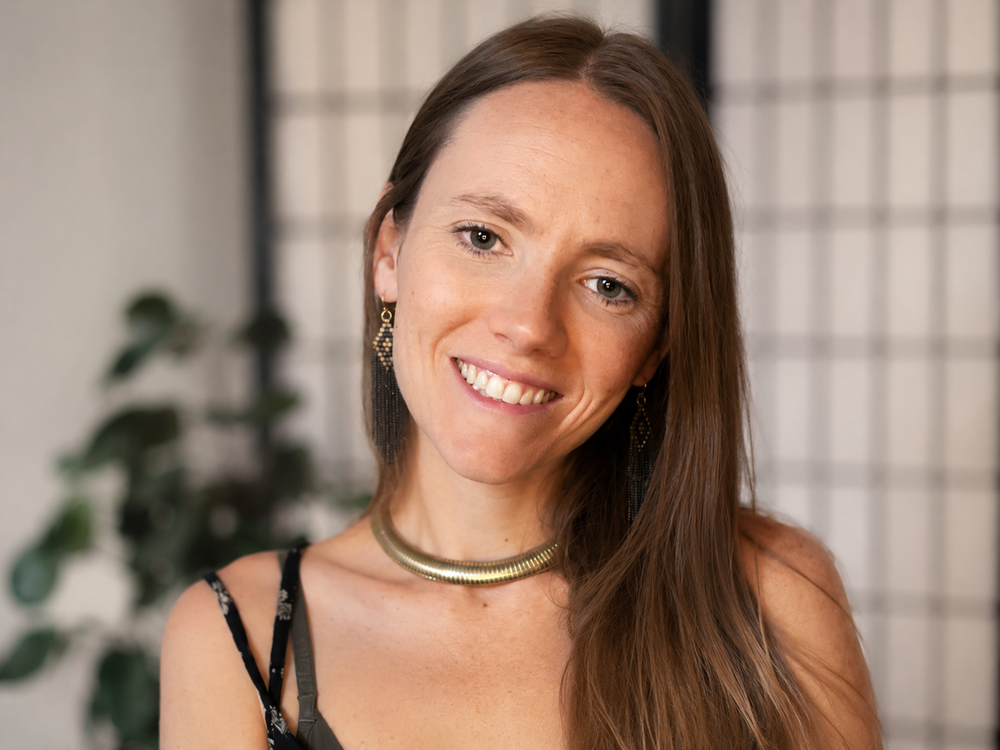
Taught by Julia Dyer. Refined through four live cohorts.
Julia founded Steady Self School as a depth-oriented meditation school rooted in the Sri Vidya lineage of classical Tantra and informed by contemporary nervous-system research.
She trained under Brooke Shannon Sullivan and completed her final intensive at the Himalayan Sage Institute in Khajuraho, India. Her background includes a B.S. in Psychology, behavioral health work, and nervous-system education. This curriculum has been taught four times and revised after each run.
Living contemplative lineage. Psychology and nervous-system literacy. Small-group live teaching.
“I find it really easy to take the practices I learn here into my everyday life — not to mention it’s not extremely ‘woo-woo,’ which I find refreshing and approachable.”
Zachary Williams
Before you join
The questions most likely to matter when deciding whether this is the right room.
How is this different from other courses?
Do I need meditation experience?
What if I already have many practices?
Is this therapy?
Do I need to adopt a religious identity?
What happens between sessions?
Eight live sessions. Two deliberate pauses. One shared arc.
January 14 through March 18, 2027. Thursdays from 5:00–6:15 p.m. PT. Tuition is $350 or four payments of $88.
Small cohort · Practitioner’s Guide included · direct access to Julia
Join the waitlist